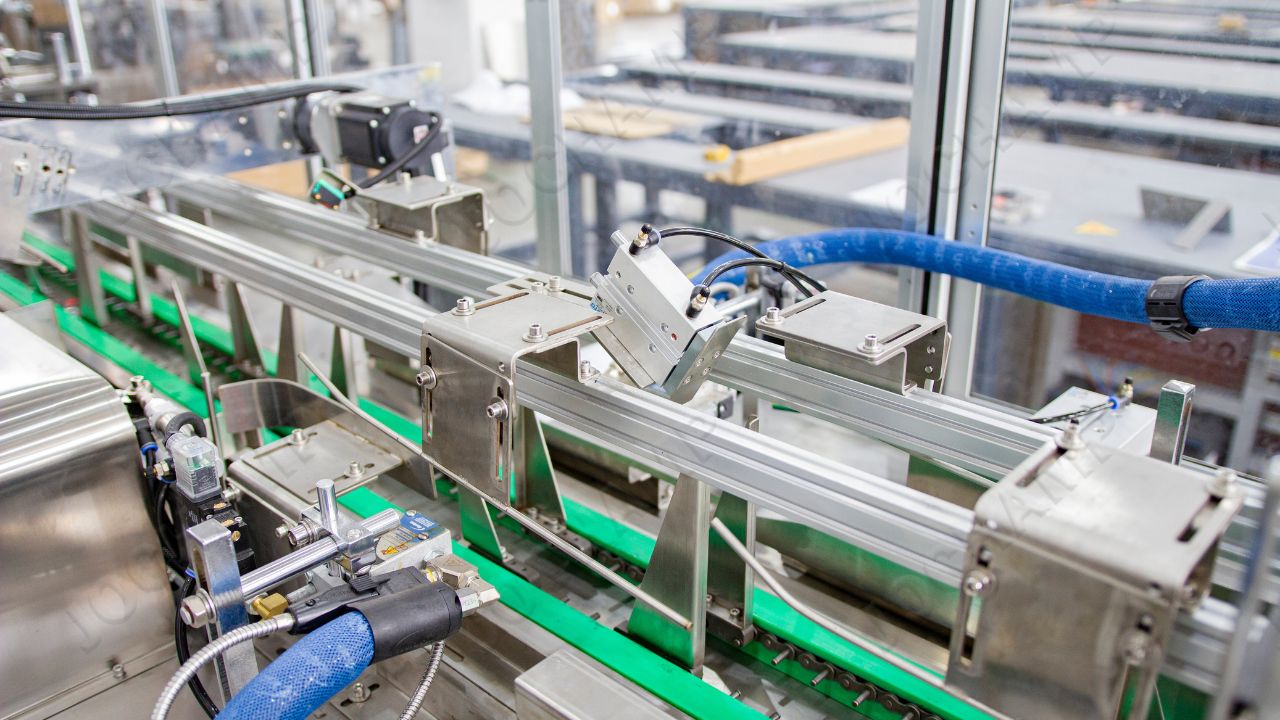
Attaining high overall equipment effectiveness (OEE) and optimizing long-term operational costs starts by choosing the right cartoning technology. Among the most versatile designs in modern production lines are top-load and end-load cartoners.
This guide provides a technical analysis of each machine’s mechanical principles, operational advantages, and applications.
Let’s start with the basics.
Understanding Top Load Cartoners 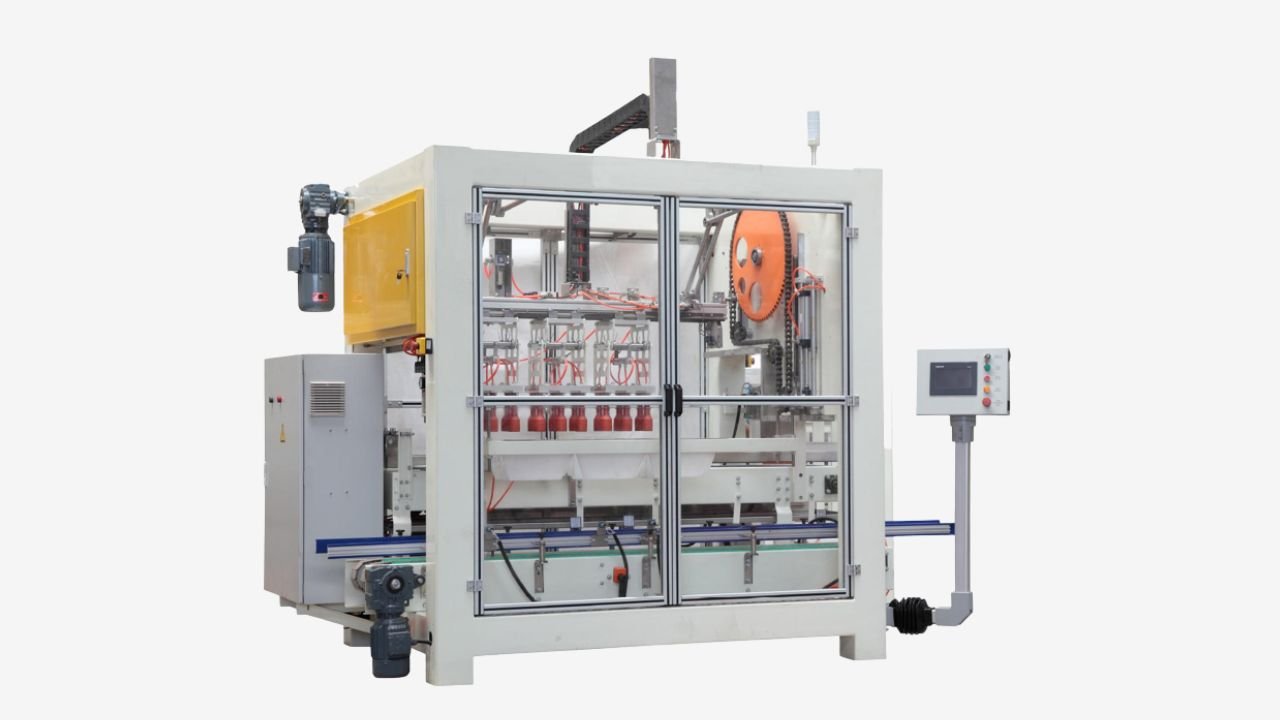
Top-load cartoners automate the loading process by inserting products vertically through the open top of an erected carton. They are specific types of vertical cartoners that use either gravity or robotics to execute the packaging process.
Of course, their working principles include forming cartons from blank material, loading products using Delta robots, and then closing the cartons. Depending on the design, these machines may use either a tri-sealer or a closer.
With these machines, you can load both fragile products and those with unique shapes, thanks to their gravity-assisted loading, which gently places items into position.
Advantages
Although top-load cartoners come in many configurations, among the key advantages of these machines include:
- Gentle handling of products
- Can handle delicate products while offering superior flexibility
- Can package products into different styles of cartons
- Popular for their ability to multitask
Understanding End Load Cartoners
In end load cartoners, the machines load products into the carton horizontally. It is for this reason that these cartoning machines are usually referred to as horizontal cartoners.
That is, both the product and cartoners move in a horizontal plane.
Key Advantages
Like other cartoning machines, end load designs offer unique advantages such as:
- Popular for high throughput with standard speeds varying from 60 to over 300 cartons per minute
- Offers high efficiency at high packaging speeds
- Guarantees continuous packaging
- Compact footprint
Differences Between Top Load and End Load Cartoners
One of the best ways to know whether a machine perfectly fits your packaging needs is to understand its key differences. It forms an important point from where you can optimize any packaging process in your production line.
| Features | Top Load | End Load |
| Loading direction | Mostly vertical loading with gravity-assisted capability | Horizontal loading, which is mainly via a push mechanism |
| Carton or box style | Mostly tri-seal and lidded carton styles | Suitable for pre-glued sleeve and tuck-end carton designs |
| Working space | May require a small floor space but a large vertical space | Requires large floor space and small vertical space |
| Product shape | Can handle irregular, fragile, or complex multi-component products | Specifically handles regular, uniform, and symmetrical-shaped products |
| Cost | Higher capital investment; greater long-term flexibility | Lower purchase price; reduced maintenance expenditure |
· Loading Direction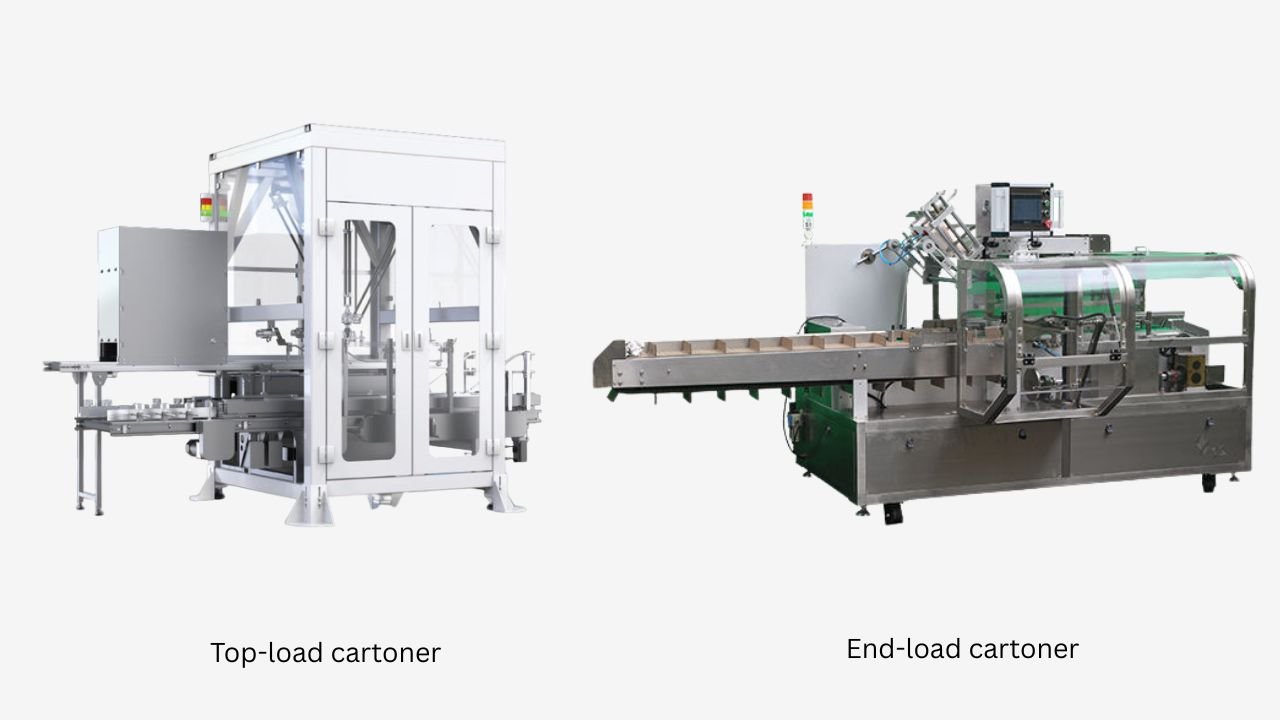
Top-load cartoners load products either through gravity or robotics systems; therefore, you don’t need horizontal force. The vertical approach makes the system suitable for products that cannot withstand lateral forces during packaging.
End-load cartoners, on the other hand, use mechanical pushers or flight bars to push products horizontally via one open end of a pre-assembled carton.
The push-based mechanism offers a consistent load force and maintains faster speeds in the machine. However, this is only suitable for products that are strong enough to handle the compression forces during packaging.
· Carton or Box Style
Top-load cartoners can easily load tri-seal-formatted cartons, tuck-top designs, and rigid-lidded boxes in a dorsal position. This is because these package containers have one open end, which is an upward-facing side that allows the product to be inserted.
These types of tamper-evident, aesthetically pleasing packaging designs prevent the destruction of products and add commercial value in the retail environment.
Unlike top-load systems, end-load cartoners are suitable where you can insert products through one end of the box. Therefore, they are highly recommended for pre-glued sleeve cartons and traditional tuck-end folding cartons.
· Footprint
Due to the design that incorporates vertical loading, integrated robotic arms, and relatively wide conveyor systems, these cartoners require a larger footprint.
On the other hand, end-load cartoners offer a horizontal loading mechanism. This results in a machine with a compact size, making it a perfect choice for situations where there is limited floor space.
· Product Shape
Top load cartoners handle an exceptionally broad range of product shapes. These may include irregular, asymmetrical, multi-component, or fragile items that standard horizontal push mechanisms would damage or fail to load reliably.
Industries that package bakery goods, fresh produce, confectionery, medical devices, or assembled kits regularly choose top-load systems for this reason.
End-load cartoners perform most reliably with uniform, symmetrical, and structurally rigid products. Such products can handle the mechanical force of the horizontal insertion mechanism without deforming or misaligning inside the carton.
· Cost
Top-load cartoners are designed with a complex mechanical setup, robotic integration capabilities, and precision required for managing diverse products. Consequently, this may lead to a high initial capital cost.
However, their flexible and multitasking abilities offer long-term cost benefits. This can certainly guarantee long-term return on investment.
End-load cartoners, on the other hand, have a simple mechanical structure with few assemblies that are easy to maintain, lowering capital expenditure. Of course, with the same machine having a capacity like the top-load cartoner, the initial cost of investment may be low.
Therefore, whenever you are making an investment decision on the right cartoner to buy, you must consider the total cost of ownership, as opposed to the initial purchase price.
Whether to Choose Top-Load or End-Load Cartoners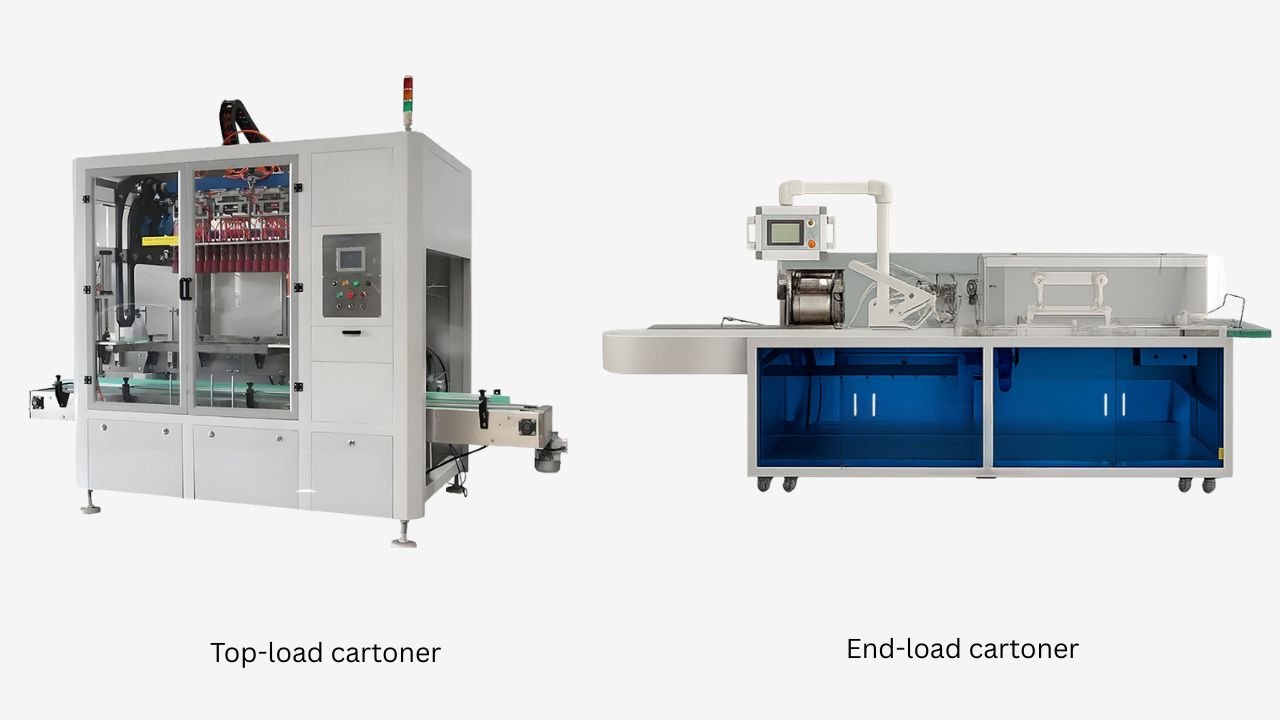
You should choose top-load cartoners when handling:
- Fragile items that require gentle handling
- Irregularly shaped products
- Items that must be packaged with robotic precision
On the other hand, consider an end-load cartoner in situations where:
- Products have regular and uniform dimensions
- Items can withstand horizontal insertion force
- High throughput is a critical production variable
FAQs
1. Which is faster between the top-load and end-load cartoners?
End-load cartoners tend to have better speed performance because they reach higher operational velocities. This is mainly attributed to their streamlined horizontal push action, but the top-load cartoners are more sensitive to the handling of the products at the expense of maximizing throughput.
2. Is there a difference between end load and side load cartoners?
In fact, end-load cartoners push goods through the shorter end of the carton. At the same time, side-load cartoners push goods via the longer side panel, which requires unique carton geometry and specific mechanical settings.
3. What is the average changeover time for a top-load cartoner?
Normal changeover times are between 30 and 90 minutes. Usually, this varies with the complexity of the machine, variations in product format, and the need to refocus or change robotic tooling or guide rails.
4. Is a horizontal or vertical cartoner reliable for high-volume production?
Horizontal end-load cartoners are more reliable in maintaining high-volume production. This is due to their mechanical simplicity, faster cycle time, and decreased number of speed-limiting operations during longer manufacturing cycles.
Partner with Neocarton
Neocarton is the leading cartoner machine manufacturer in China. We customize every cartoning machine to match your unique packaging needs. Therefore, whether you are looking for horizontal or vertical cartoning machines, Neocarton offers a complete turnkey solution to match your unique production line – get a quote now.